Whispers of the Wild: My Secret Sanctuary in Vietnam’s Sapa Highlands
Nestled high in northern Vietnam, Sapa isn’t just about terraced rice fields and bustling markets—deep within its misty mountains lies a protected realm few truly know. I stumbled upon this hidden ecological gem by chance, and what I found was beyond imagination: pristine forests, rare wildlife, and a quiet so profound it reshapes your soul. This is more than travel—it’s reconnection. Let me take you where few have gone, into a landscape where nature breathes undisturbed, where every footstep feels like a return to something ancient and essential. Here, in the heart of the Hoang Lien Son range, conservation and wonder walk hand in hand.
The Allure of Off-the-Path Travel
In an age where popular destinations are often crowded and overexposed, a quiet shift is happening among thoughtful travelers. More people are seeking experiences that go beyond photo opportunities and instead offer presence, depth, and authenticity. The desire to step away from the well-trodden path is not just about avoiding crowds—it’s about finding meaning in stillness, in untouched landscapes, and in the simple act of witnessing nature as it truly is. Sapa, long celebrated for its breathtaking terraces and vibrant hill tribe cultures, has become a magnet for tourists from around the world. Yet beyond the postcard-perfect villages of Cat Cat and Ta Van, there exists a quieter, more sacred dimension.
This is the realm of protected forest zones, where access is carefully managed and tourism is designed not for mass appeal but for preservation. These areas are not hidden because they are unimportant, but because their value lies in their seclusion. Conservation-focused travel is rising in appeal, not only for environmental reasons but for personal ones. Time spent in such places offers mental clarity, emotional restoration, and a renewed sense of connection to the earth. The growing interest in eco-sensitive destinations reflects a deeper cultural shift—people no longer just want to see the world; they want to protect it.
What makes these off-the-path regions so compelling is their integrity. Unlike commercialized sites, they remain largely unchanged by infrastructure, noise, or excess foot traffic. They offer what anthropologists sometimes call ‘thin places’—spaces where the boundary between the everyday and the eternal seems to dissolve. In Vietnam’s northern highlands, such places still exist, carefully guarded by local communities and environmental stewards. For the mindful traveler, visiting these zones is not an escape, but a homecoming.
Discovering Sapa’s Hidden Protectorate
The journey to this secluded sanctuary begins where the paved roads end. From the town of Sapa, most visitors head straight to the well-known trekking routes, but those seeking the reserve must turn toward quieter trails, often accompanied by a local guide familiar with the terrain. The transition is immediate: the chatter of vendors fades, the scent of wood smoke gives way to damp earth and pine, and the rhythm of life slows to match the pace of the forest. It takes several hours of hiking along narrow footpaths, climbing through mist-laced ridges and crossing wooden footbridges over clear, rushing streams, before one truly enters the heart of the protected zone.
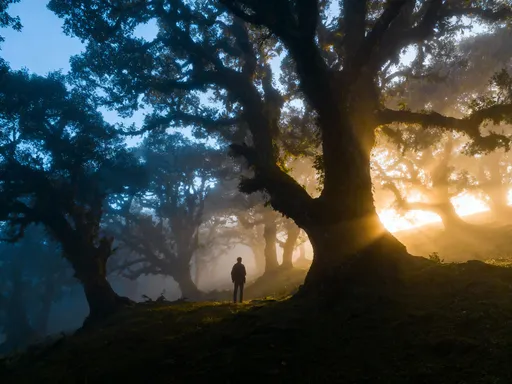
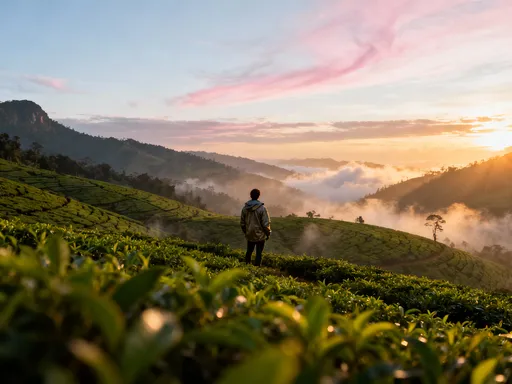
Morning is the most magical time. As the sun rises above the Hoang Lien range, thick fog drifts between ancient trees like living breath, curling around moss-covered trunks and fern-laden slopes. Birdsong emerges in layers—the sharp call of a silver pheasant, the soft coo of a hill partridge, the distant cry of a crested argus. The air is cool and crisp, carrying the clean scent of wet bark and wild herbs. Every sense feels heightened. There are no signs, no marked viewpoints, no souvenir stalls—only the natural architecture of the forest, untouched and unspoiled.
What strikes most visitors is the silence. Not an absence of sound, but a different kind of presence—one that allows the natural world to speak. The rustle of leaves, the distant drip of water, the faint snap of a twig under unseen feet—these become the language of the place. It’s a sanctuary not just for wildlife, but for the human spirit. Travelers often describe a sense of calm that settles within minutes of arrival, as if the forest itself offers a kind of quiet welcome. This is not a destination for the hurried or the loud; it is for those who come with patience, respect, and open hearts.
Guardians of Biodiversity: What Makes This Reserve Special
The ecological importance of this protected area cannot be overstated. Located within the Hoang Lien Son biodiversity hotspot, it forms part of one of the most biologically rich regions in Southeast Asia. The reserve spans elevations from 1,200 to over 2,500 meters, creating a mosaic of ecosystems—from montane evergreen forests to high-altitude cloud forests. This variation in altitude and climate supports an extraordinary range of plant and animal life, some of which are found nowhere else on Earth.
Among the most notable inhabitants is the critically endangered Tonkin snub-nosed monkey, a rare primate with striking black fur and an upturned nose. Though sightings are rare, their presence is a powerful indicator of the forest’s health. Other protected species include the clouded leopard, the Asiatic black bear, and the tragopan pheasant, all of which depend on undisturbed habitat to survive. The forest floor teems with life as well—rare orchids bloom in shaded clearings, medicinal herbs grow wild, and towering tree species like the Sapa oak and the Hoang Lien pine stand as silent sentinels of centuries past.
Conservation efforts in the region are led by a collaboration between national park authorities and local ethnic communities, particularly the Hmong and Dao people, who have lived in harmony with these forests for generations. Their traditional knowledge plays a vital role in monitoring wildlife, protecting watersheds, and preventing illegal logging. Rangers conduct regular patrols, and camera traps help track animal movements without disturbing them. While specific programs may vary year to year, the core mission remains constant: to preserve this fragile ecosystem for future generations. Every visit to the reserve, when done responsibly, supports this mission by funding local stewardship and raising awareness.
Walking Lightly: Sustainable Exploration in Practice
Visiting such a delicate environment comes with responsibility. The principle of ‘walking lightly’ is not just a suggestion—it is essential. Sustainable exploration means minimizing impact at every turn: staying on designated trails, avoiding littering, refraining from feeding wildlife, and keeping noise to a minimum. The reserve operates under a permit system that limits daily visitor numbers, ensuring that foot traffic does not degrade the landscape or disturb animal behavior. These rules are not barriers to enjoyment, but gateways to deeper connection.
Trekking is the primary way to experience the area, but not all hikes are equal. Responsible operators follow eco-certified guidelines, employ local guides, and emphasize education about conservation. The best time to visit is during the dry season, from March to May or September to November, when trails are safer and visibility is clearer. Early morning and late afternoon are ideal for wildlife observation, as many animals are most active during these cooler hours. Visitors are encouraged to bring reusable water bottles, biodegradable toiletries, and weather-appropriate clothing made from sustainable materials.
Community-based tourism models are increasingly common in the region, allowing travelers to stay in family-run homestays, eat locally grown food, and learn directly from residents about forest traditions. These experiences foster mutual respect and ensure that tourism benefits the people who protect the land. By choosing operators committed to sustainability, travelers help fund conservation efforts and reduce reliance on more damaging economic activities. In this way, every mindful decision—from the guide you hire to the trash you carry out—becomes an act of preservation.
Moments That Stay: Personal Encounters with Nature
Some memories do not fade. One morning, as I sat quietly beside a mossy stream, a group of barking deer emerged from the underbrush, their slender legs moving with silent grace across the stones. They paused, ears twitching, before vanishing into the green shadows. No cameras, no shouts—just stillness and awe. Another day, I crossed a fallen tree bridge, its surface slick with moss, spanning a clear mountain stream. Below, tiny fish darted between pebbles, and the water sang as it tumbled over rocks. In that moment, the world felt perfectly balanced.
Perhaps the most touching experience was sharing a simple meal with a forest guardian—a local Hmong man who has spent decades patrolling these woods. Over hot ginger tea and roasted corn, he spoke of the changes he’s seen: fewer animals in his youth, but now, slowly, signs of return. He showed me a notebook where he logs animal tracks and flowering plants, a quiet act of devotion to the land. His words were few, but his presence spoke volumes. There was no performance, no expectation of a tip—only a deep, quiet pride in being a caretaker of this place.
These are not dramatic encounters, but they are profound. They remind us that travel at its best is not about conquest or collection, but about presence. It’s about learning to listen—to the wind, to the birds, to the people who know the forest’s language. Such moments stay not because they are extraordinary in action, but because they awaken something within us: a sense of belonging, of humility, of wonder. They are the quiet gifts of wild places, given freely to those who come with open eyes and quiet hearts.
Beyond Beauty: Why Protected Places Matter for Travelers
The value of protected natural areas extends far beyond their scenic beauty. For travelers, especially those in the 30 to 55 age range—often balancing family, work, and personal well-being—such places offer a rare form of restoration. Studies have shown that time spent in nature reduces stress, improves mood, and enhances cognitive function. But beyond science, there is a deeper truth: these landscapes remind us of our place in the web of life. They offer perspective, grounding, and a sense of peace that is difficult to find in daily routines.
In a world that often feels fragmented and fast-moving, protected forests provide continuity and stillness. They are living archives of resilience, shaped by centuries of natural processes. To walk through them is to step outside of time, to slow down, to breathe more deeply. For parents, such experiences can be especially meaningful—offering a chance to model environmental stewardship for children, to teach respect for nature not through lectures, but through shared silence and observation.
Moreover, visiting these areas fosters environmental awareness in a way that statistics and documentaries cannot. Seeing a rare bird in flight, hearing the call of a distant gibbon, or learning how a community protects its watershed—these experiences create emotional connections that last. They inspire action, not out of guilt, but out of love. When travelers return home, they carry more than photographs; they carry a quiet commitment to live more gently on the earth. In this way, protected places do not just conserve biodiversity—they cultivate empathy, mindfulness, and hope.
How to Visit Right: A Practical Guide for Conscious Travelers
Planning a visit to this hidden sanctuary requires preparation and intention. First, choose a tour operator that is certified by recognized eco-tourism standards or affiliated with conservation organizations. Look for those that employ local guides, contribute to community funds, and limit group sizes. Avoid any service that promises guaranteed wildlife sightings or off-trail access—these often compromise safety and ethics.
Permits are required and should be arranged in advance through authorized agencies. These help regulate visitor flow and fund park maintenance. Pack thoughtfully: sturdy hiking boots, layered clothing, a rain cover, and a small backpack with essentials. Bring a reusable water filter or purification tablets to reduce plastic use. While smartphones are useful for photos, consider leaving behind loud speakers or drones, which can disturb wildlife and other visitors.
Cultural sensitivity is equally important. The Hmong and Dao communities welcome respectful guests, but expect modest dress, polite greetings, and permission before photographing people. Learn a few basic phrases in Vietnamese or the local dialect—it goes a long way in building trust. Remember that this is not a theme park, but a living landscape where people and nature coexist. Patience is key: trails may be slow, weather unpredictable, and wildlife elusive. But these are not inconveniences—they are part of the experience.
Finally, consider making a contribution to a local conservation initiative, whether through a donation, volunteering, or simply spreading awareness. Even small actions—like sharing your experience responsibly on social media—can inspire others to travel with care. The goal is not to ‘conquer’ the forest, but to honor it.
Closing Reflection: Carrying the Wild With You
As I descended from the highlands, the sounds of the forest lingering in my memory, I realized that the true journey had only just begun. The sanctuary in Sapa’s misty peaks is not just a place on a map—it is a feeling, a reminder, a quiet call to live with greater awareness. Its magic lies not in spectacle, but in subtlety: the way light filters through ancient trees, the hush after rain, the shared smile with a guardian of the woods.
This is the power of protected places—they change us. They teach us to move slowly, to listen deeply, to protect fiercely. For families, for individuals, for anyone seeking meaning beyond the surface, such destinations offer something rare and enduring. They invite us to trade checklist tourism for depth, to replace consumption with care.
And so, I leave you with this thought: the next time you plan a journey, consider not just where you want to go, but why. Let your travels reflect your values. Seek out places that need protection, support communities that steward the land, and walk with reverence. Because every forest preserved, every species protected, begins with someone who cared enough to visit—and to return home changed. The wild is still whispering. Are you listening?